

Remote work has firmly established itself as the new global standard. More and more professionals…
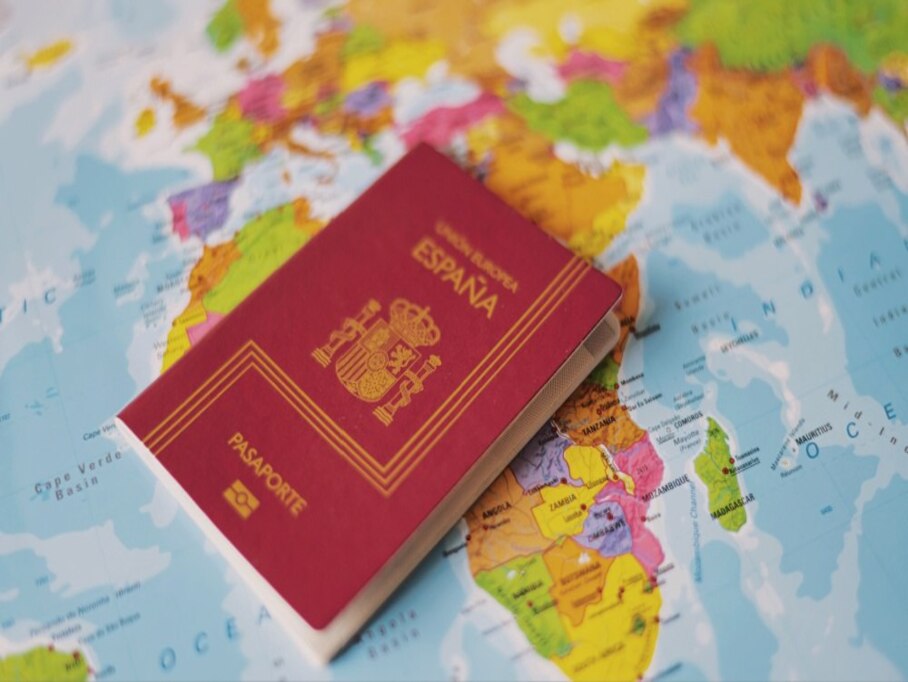
Moving to Spain: 5 Situations Every Immigrant Faces
Moving to Spain opens the door to new opportunities, but it often comes with bureaucratic challenges. How do you obtain a criminal record certificate if you already live in Spain? What should you do if you lose your residence card? When are you required to file a tax return if you own property but are not a resident?
These topics were covered in our video “Moving to Spain: 5 Answers That Can Change Your Life.” This article is an expanded version with comments from ProSpainConsulting lawyers and practical explanations that will help you avoid mistakes when handling documents and managing your status in Spain.
1. How to Obtain a Criminal Record Certificate Without Leaving Spain
The procedure depends on the country that issued the document. Some states allow you to request it online or through a representative. If such options are not available, you will need a power of attorney notarized in Spain and legalized in the country of origin.
This power of attorney is signed before a notary and then apostilled at the notarial chamber. The entire procedure may take 2–3 days. Once the document is prepared, it must be sent to the country of origin and translated by a sworn translator. After that, the power of attorney can be used (including for requesting a criminal record certificate).
2. Who Is a Traductor Jurado and Why Their Translation Is Mandatory
A Traductor Jurado is a sworn translator accredited by the Spanish Ministry of Foreign Affairs. Translations performed by such specialists have legal validity and are accepted by all official institutions, including immigration offices and notarial chambers.
Using a non-certified translation is one of the most common reasons for document rejections. You can check the current list of sworn translators on the website of the Spanish Ministry of Foreign Affairs. It is important to note that for some languages there are currently no sworn translators in Spain (for example, Georgian). In such cases, the translation must be done at the Consulate of the issuing country and then authenticated by the Spanish Ministry of Foreign Affairs.
3. Lost Residence Card: Step-by-Step Instructions
If you lose your residence card (TIE), you must immediately file a police report. Based on that document, you can submit a new application for a replacement card, pay the required fee, and provide your fingerprints again.
The waiting period for the new card is about 30 calendar days. If the card is lost outside Spain, you cannot re-enter the country without a valid travel document. In such cases, it is crucial to contact lawyers as soon as possible to begin the recovery process. While waiting for the new card, it is possible to request an Autorización de regreso (Return Authorization), which allows you to leave and re-enter Spain during its validity period.
To minimize the risk associated with losing your residence card, it is recommended to obtain a notarized copy and carry it with you—such a copy is accepted within Spain, while the original can be kept in a safe place.
4. Can You Change the Type of Residence Permit?
Spanish law allows modification of residence permits (modificación de residencia), for example transitioning from student residency to a work permit. However, immigration authorities have become stricter in assessing applicants, and each case requires individual evaluation.
Previously, it was common to modify a student stay permit into a work residency (either for employment or self-employment). However, in May 2025, after amendments to immigration law came into force, this option became available only to students enrolled in higher education programs.
Currently, many applicants seek to modify digital nomad residency to self-employment residency. Regardless of the type of modification, the authorities pay close attention to compliance with the conditions of the original residence permit—if any requirement was violated, the modification will be denied.
5. Tax Obligations for Non-Residents
Even if you are not a tax resident of Spain, owning property requires you to file certain tax declarations. You must submit Modelo 210 annually, indicating the cadastral value and acquisition date of the property.
If the property is rented out, Modelo 210 must also be filed. Failure to comply may lead to tax penalties and complicate the renewal of your residence permit.
It is extremely important to take this reporting obligation seriously from the moment of purchase and plan future filings together with a lawyer. You should also clearly distinguish between different types of taxes and fees related to property ownership—for example, the municipal property tax (IBI, Impuesto de Bienes Inmuebles) is usually paid automatically to municipal budgets and is not reflected in Modelo 210.
Common Practical Mistakes to Avoid
- using non-certified document translations
- submitting an expired criminal record certificate
- missing apostilles or incorrect document legalization
- missing deadlines for filing tax forms
These mistakes frequently lead to refusals or fines, so checking your documents before submission is essential.
If You Are Planning to Move
Preparing your paperwork in advance helps avoid delays and unexpected expenses. We recommend:
- confirming which documents from your home country require an apostille;
- calculating your potential tax burden and determining whether you will be considered a Spanish tax resident;
- choosing the appropriate type of residence permit based on your goals (study, work, investment, entrepreneurship).
Spanish bureaucracy requires attention to detail, but with proper preparation all administrative procedures are predictable and manageable.
If you are preparing to move or want to review your current situation, ProSpainConsulting specialists can help assess your documents, select the optimal residence type, and calculate your tax obligations in advance.
Related Posts